Thursday, May 22, 2008

It's Hammer Time! -- Comic Covers Do-Overs


I'm starting a new series of drawings that, until I can think of a better name, I call Comic Covers Do-Overs. Basically, what I do is take a comic cover that inspires me and that I find striking in some way. As I copy it I analyze the composition and the conventions of the genre, hoping I can absorb them into my subconscious and use them some day. I redraw the cover in my own goofy style.

I like comics of all types, but I miss something that comics had when I was a kid. Yes, they were hokey and over the top, but many of the artists and writers were willing to not take themselves too seriously and wrote and drew with their tongue firmly in cheek. I'm having a good time drawing these and I'm finding that it helps me get out of a rut when it's tough to get started on a new project.

Who Says that Artists Never Copy?

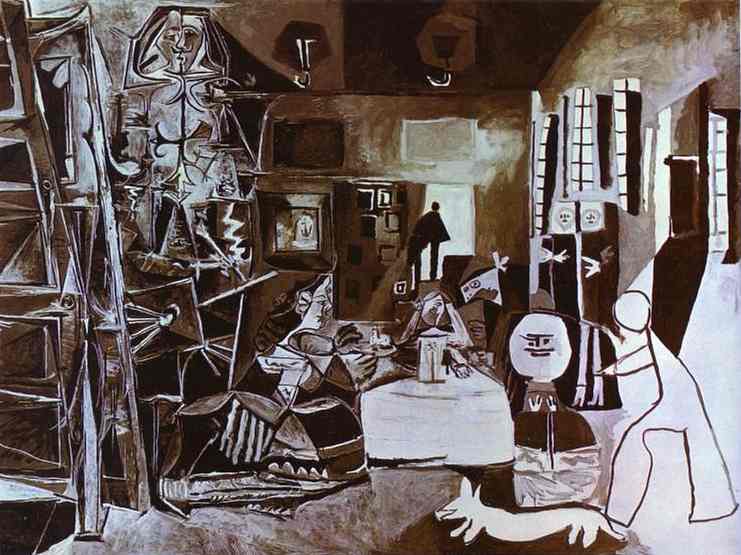
Picasso's copy of a Velasquez painting


Lichtenstein's copy of a Picasso painting

Artists never copy, right? Not so fast. Let's look at some quotes from some famous artists:

"An artist should not be allowed to draw so much as a radish without the constant habit of copying the old masters." - Degas.

Renoir also had great admiration for the master artists of previous generations and made copies of their work throughout his career.


"When we look at the work of the old masters, we have nothing to congratulate ourselves on. What marvelous craftsmen they were! They knew their job; that's the whole secret. Painting isn't dreaming; it's primary a manual drill and one has to be a good workman." - Renoir

Now certainly they weren't recommending that we copy someone's work and try to pass it off as our own, but I think the way art is taught in our time, it leaves out the benefits that can be gained from making studies like these artists did.

There seems to be two kinds of copying that great artists of the past recommended.

1. Copying to learn, as is described above, and

2. Copying to find your style. I think this is what Picasso meant when he said,

"What does it mean for a painter to paint in the manner of So-and-So or to actually imitate someone else? What's wrong with that? On the contrary, it's a good idea. You should constantly try to paint like someone else. But the thing is, you can't! You would like to. You try. But it turns out to be a botch...And at the very moment you make a botch of it that you're yourself."
-Picasso (Parmelin, Picasso: The Artist and His Model, and other Recent Works,
1965, p. 43)

When we do try to copy works by others, we see something distinctively different in our own that keeps cropping up. It's like something is pulling you away. This could be a revelation of individual style. Picasso was saying, pay attention to those things and run with it.

Sunday, May 18, 2008

The PH Scale in Cartoons


Marissa just got finished with a masterpiece of a project for her 8th grade Science class. Her assignment was to make a poster illustrating the PH Scale. This makes these great little manga style characters. This is just a small piece of it, showing familiar items on the scale including (5) acid rain and coffee, (6) milk and urine, and (7) pure water. Great job, Marissa!

Thursday, May 15, 2008

Comics in Class


One of my co-workers gave me a copy of the April 25 Time Magazine for Kids. The cover story is on the "Power of Comics" and asks the question, "Can cartoons turn kids into superreaders?" The whole story can be read online here.


This month's issue of Instructor has an article about comics as well. They recommend a comics lesson as the last lesson of the year -- with a challenge to students to create a comic over the summer. Here's a quote from the article about why comics in the classroom is such a great idea:


Moreover, students known for behavior problems during typical reading and
writing activities were the most engaged during comic book lessons. “Suddenly
these kids became leaders,” says Bitz. “They collaborated and started to work
together to become part of education, whereas before they were shut out.”
Creating comic books is an opportunity for kids who struggle with reading to
excel because, says Bitz, “it’s not about speed. It’s about the story and about
how creative you can be.”


Tuesday, May 13, 2008

Bible Comics: Moses in the Wilderness


Once in a while I teach a Sunday School lesson at my church. I like to make my own comics to give the kids. My favorite Bible to use is the Message Bible. The script for this one is almost straight from it. This Bible paraphrases the text in to "street language".

The story ends kind of abruptly since I stopped working on it when I ran out of time. I think the main lesson this story can teach us today is "Sometimes things have to get worse before they get better."

Women in Art


While I was getting a Master's in Art Ed at Mansfield, I took a course called Women in Art. It dealt with women artists and how women have been portrayed in art. Guess who I wrote about for my final paper? You guessed it! Wonder Woman. The paper was published in Papyrus, the art history e-journal at MU and can be read here.

Roy Lichtenstein: A Modern Master


It's no secret that Roy Lichtenstein is one of my favorite artists. A couple years ago, I wrote a paper about him for an art history course and it was published in Papyrus, the art history e-journal at Mansfield University.

You can read the article here.